Markram’s century lifts South Africa to brink of first ICC title since 1998
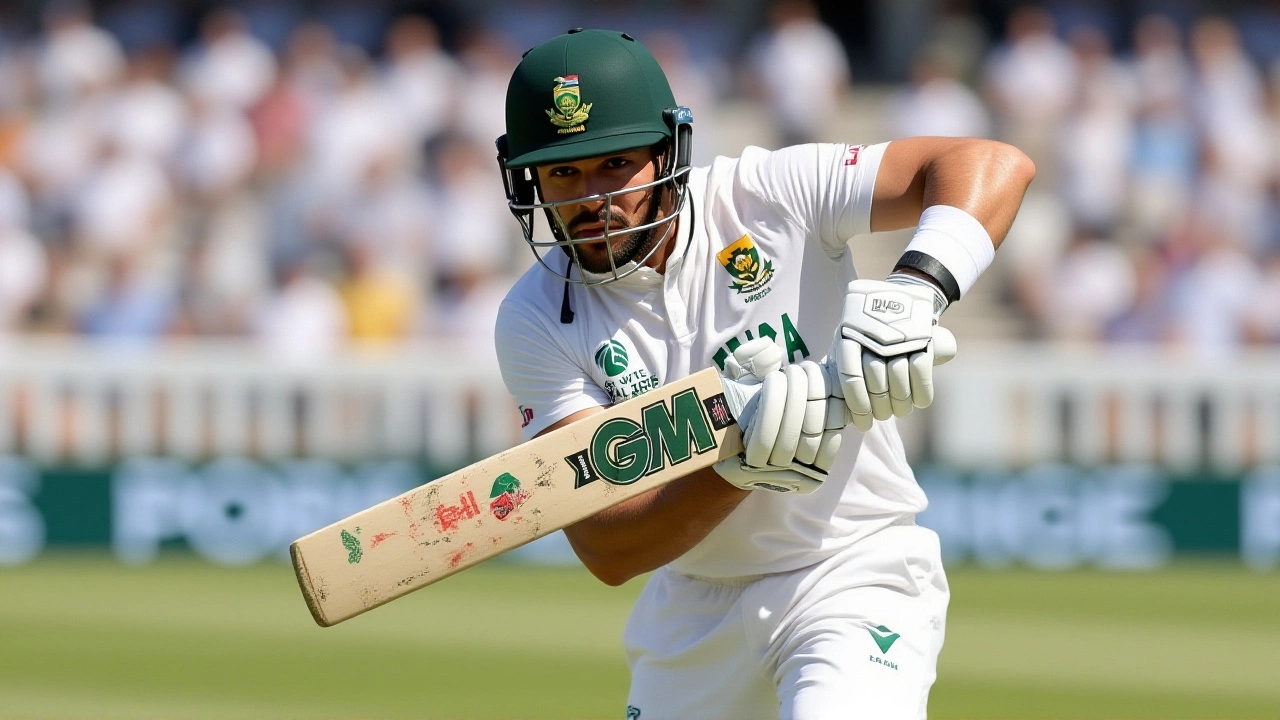
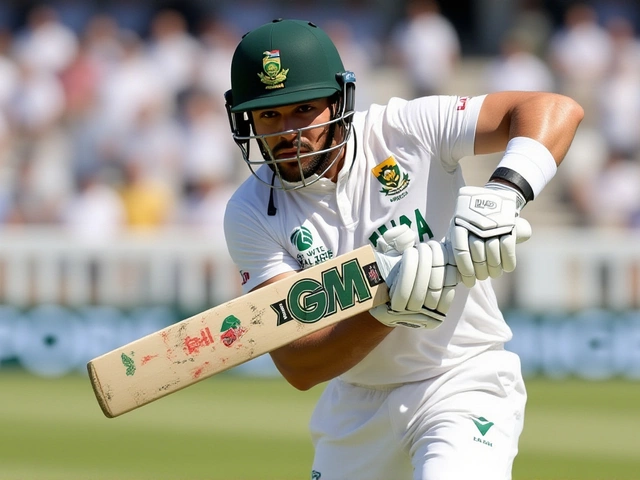
On a sun-dappled afternoon at Lord's Cricket Ground, Aiden Markram didn’t just bat — he carried the hopes of a nation on his shoulders. On the World Test Championship Final 2025London, the South African opener, who had been dismissed for a duck in the first innings, responded with one of the most emotionally charged centuries in Test history. By stumps on Day 3, he stood unbeaten on 102 off 159 balls, his eighth Test hundred, and the third ever scored in a WTC Final. South Africa, chasing 282, were 213 for 2, needing just 69 more runs to claim their first ICC world title in 27 years.
A century born from heartbreak
Markram’s innings wasn’t just statistically impressive — it was cathartic. He had been the man left staring at the scoreboard after South Africa’s devastating seven-run loss to India in the T20 World Cup finalDubai. "I don’t want to sit there again," he told himself before walking out to bat on Day 3. That mantra carried him through 159 balls of relentless concentration, each shot a quiet rebellion against years of near-misses. He became the ninth batter in history to score both a duck and a century in the same Test at Lord's Cricket Ground, joining legends like Michael Vaughan and Misbah-ul-Haq. But unlike them, Markram did it on the grandest stage of all — the final of the most prestigious format in cricket.The partnership that changed everything
After Ryan Rickelton fell for six and Wiaan Mulder was caught at cover for 27, both by Australia’s Mitchell Starc, the innings teetered. Then came Temba Bavuma, captain and wounded warrior. Battling a hamstring injury sustained during his own innings, Bavuma anchored the chase with 65 not out, his grit as vital as Markram’s aggression. Together, they forged a 143-run stand for the third wicket — unbroken, unshaken. Australia threw everything at them: six different bowlers, including Josh Hazlewood, whose final over saw Markram bring up his century with a crisp cover drive. The crowd, split between South African and Australian flags, fell silent as the boundary crossed the rope. No cheers. Just awe.Australia’s desperate fight — and why it fell short
Australia had looked dominant early on Day 3. After bowling South Africa out for 207 in their second innings, they’d hoped to exploit the lingering wear on the pitch. But the conditions, unlike the brutal first two days where 14 wickets fell each day, had softened. The ball didn’t seam or spin like before. Pat Cummins, Australia’s captain, tried every variation — spinners, short spells, new-ball changes — but nothing broke the partnership. Even when Markram was dropped on 42 by a diving Marnus Labuschagne at slip, the momentum shifted irrevocably. The only bright spot for Australia was Mitchell Starc, who took 4 for 58 in the match, including the crucial wickets of Rickelton and Mulder. But even his brilliance couldn’t counter the calm of two men who refused to let history slip away.A legacy sealed — and a nation’s burden lifted
The next day, South Africa completed the chase. Markram was dismissed for 136 — six runs short of victory — but the result was never in doubt. As he walked off, every Australian player rose to applaud. Even Pat Cummins embraced him. It wasn’t just sportsmanship — it was respect. The win ended South Africa’s 27-year wait for an ICC title. They hadn’t won a global tournament since the 1998 Champions Trophy. They’d lost five World Cup semi-finals — three to Australia — and last year’s T20 final by the narrowest of margins. Now, they were world champions in Test cricket. Former great AB de Villiers, watching from the stands, captured the moment Markram broke down in tears after reaching his hundred — too overcome to raise his bat. That silence, that emotion, said more than any trophy ever could.What this means for cricket
This wasn’t just a win. It was a reckoning. Australia, aiming to become the first team to win back-to-back WTC titles since the tournament began in 2019, were stopped cold. South Africa, with seven straight Test wins leading into the final, proved they were the most consistent side over the cycle. Markram’s 1,601 runs in 29 WTC matches now stand as the most by any batter across three editions. His century was the 10th in WTC Final history — and the first by a non-Australian since 2019. For the first time, the South Africa national cricket team holds the WTC mace. And for the first time in decades, the phrase "chokers" has been buried under the weight of a century, a partnership, and a nation’s long-overdue redemption.Frequently Asked Questions
How did Aiden Markram’s performance compare to other WTC Final centuries?
Markram’s 136 was the third century in WTC Final history, joining Steve Smith (142 in 2023) and Travis Head (155 in 2023). But unlike Smith and Head, who both scored theirs in Australia’s first innings, Markram’s came under immense pressure while chasing — and after a duck in the first innings. His 1,601 WTC runs across three cycles are the most by any batter, making him the tournament’s most consistent performer.
Why is scoring a duck and a century in the same Test at Lord’s so rare?
Only eight batters had done it at Lord’s before Markram, with the last being Pakistan’s Misbah-ul-Haq in 2016. The pitch’s reputation for fairness makes it hard to swing from zero to hero — especially in a final. The mental resilience required is extraordinary. Markram’s ability to reset after a first-innings failure, then dominate under pressure, is what made his feat historic.
What impact does this win have on South African cricket?
This victory ends decades of near-misses and psychological baggage. South Africa had lost five World Cup semi-finals — including three to Australia — and the 2024 T20 final by seven runs. Winning the WTC shifts the narrative from "almost" to "champions." It also validates their recent rise: seven straight Test wins, a top-ranked team, and now, a global title. Expect a surge in youth participation and sponsorship.
Could Australia still have won the match?
By the time Markram reached his century, Australia’s chances were slim. With 69 runs needed and two established batters at the crease, even a collapse of three wickets wouldn’t have been enough unless the pitch suddenly turned hostile again. Australia had no spinners left in the XI, and their pace attack was exhausted. The writing was on the wall — and the crowd knew it.
How did Temba Bavuma’s injury affect South Africa’s strategy?
Bavuma’s hamstring injury meant he couldn’t run between wickets freely. He relied on Markram to rotate strike, which is why Markram faced 159 balls to Bavuma’s 92. But Bavuma’s presence was psychological — his calmness under pressure, even while limping, gave the team stability. He didn’t just bat; he led from the crease, making him the perfect foil for Markram’s intensity.
What’s next for the World Test Championship?
The 2025-2027 cycle begins in June 2025, with the final scheduled for June 2027. South Africa’s win has raised expectations — they’ll be favorites to defend the title. Australia, despite the loss, remain a powerhouse. India and England will be hungry to reclaim dominance. But for now, the mace rests in Cape Town — and the world’s best Test team has a new name.